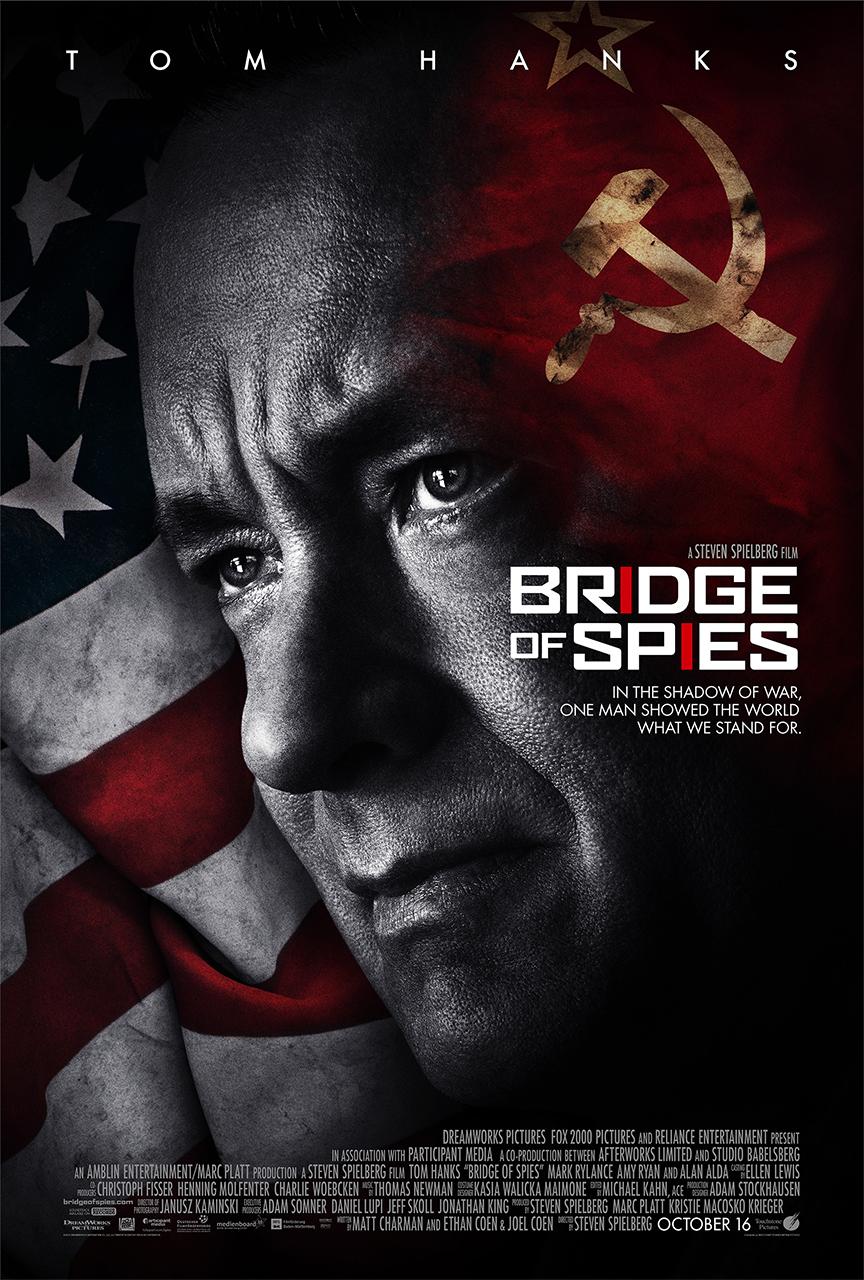
Bridge of Spies
During the Cold War, an American lawyer is recruited to defend an arrested Soviet spy in court, and then help the CIA facilitate an exchange of the spy for the Soviet captured American U2 spy plane pilot, Francis Gary Powers.
Tahun
2015
Durasi
2h 22m
IMDb
7.6
Poster Feed
Pemeran
Tom Hanks
James B. Donovan
Mark Rylance
Rudolf Abel
Alan Alda
Thomas Watters Jr.
Pemeran
Tom Hanks
James B. Donovan
Mark Rylance
Rudolf Abel
Alan Alda
Thomas Watters Jr.
Domenick Lombardozzi
Agent Blasco
Victor Verhaeghe
Agent Gamber
Mark Fichera
FBI Agent
Brian Hutchison
FBI Agent
Joshua Harto
Bates
Henny Russell
Receptionist
Rebekah Brockman
Alison (Donovan's Secretary)
John Rue
Lynn Goodnough
Billy Magnussen
Doug Forrester
Amy Ryan
Mary Donovan
Jillian Lebling
Peggy Donovan
Noah Schnapp
Roger Donovan
Eve Hewson
Carol Donovan
Joel Brady
Police Officer - Brooklyn Courthouse
Austin Stowell
Francis Gary Powers
Trailer
Mungkin Anda Juga Suka
Bridge of Spies
The Trial of the Chicago 7
We Go in at Dawn
Say Nothing
Manhunt
A Gentleman in Moscow
The Hijacking of Flight 601
The Railway Men
Shadowplay
Children of the Church Steps
Sleeping with the Enemy
Radioactive Emergency
Yosi, the Regretful Spy
Oktoberfest: Beer & Blood
Vera
Glória
Summer of 36
World War II with Tom Hanks
The Chi
wolves of blood moon
Saints & Sinners
The Five-Star Weekend
The Last Teal Dragon
Pilihan Unggulan
Ingin hiburan tambahan? Jelajahi hub game rekomendasi kami dan destinasi short drama pilihan.